
- Ssh servername ssh user @ servername ssh admin @ ls.backup ssh command when using shell scripts The multi-line command syntax is as follows and need to take help of Here document feature provided by bash.
- Scp.exe is a file copy utility that runs on SSH Documentation in this section focuses on how OpenSSH is used on Windows, including installation, and Windows-specific configuration and use cases. Here are the topics: Additional detailed documentation for common OpenSSH features is available online at OpenSSH.com.
scp — OpenSSH secure file copy
scp | [-346ABCpqrTv] [-ccipher] [-Fssh_config] [-iidentity_file] [-Jdestination] [-llimit] [-ossh_option] [-Pport] [-Sprogram] source ... target |
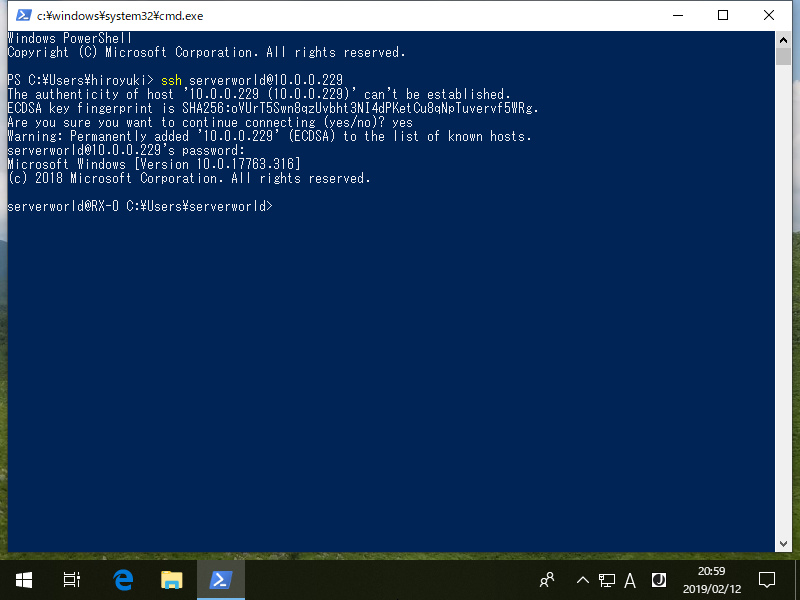
scp copies files between hosts on a network.
OpenSSH 8.5p1-1 This is an updated OpenSSH 8.5p1-1 installer for both x86 and x64 binaries. This version includes ssh-sk-helper.exe, cygfido2-1.dll, and cygcbor-0.dll (which was missing last time) so I hope it provides Yubikey support (I have no way to test that).
It uses ssh(1) for data transfer, and uses the same authentication and provides the same security as a login session. The scp protocol requires execution of the remote user's shell to perform glob(3) pattern matching.
scp will ask for passwords or passphrases if they are needed for authentication.
The source and target may be specified as a local pathname, a remote host with optional path in the form [user@]host:[path], or a URI in the form scp://[user@]host[:port][/path]. Local file names can be made explicit using absolute or relative pathnames to avoid scp treating file names containing ‘:’ as host specifiers.
When copying between two remote hosts, if the URI format is used, a port may only be specified on the target if the -3 option is used.
The options are as follows:
-3scp cannot ask for passwords or passphrases for both hosts.-4scp to use IPv4 addresses only.-6scp to use IPv6 addresses only.-A-B-C-C flag to ssh(1) to enable compression.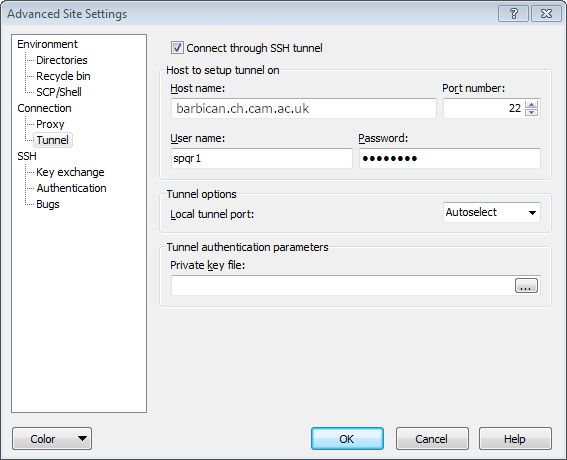
-ccipher-Fssh_configssh. This option is directly passed to ssh(1).-iidentity_fileOpenssh Scp
-Jdestinationscp connection to the jump host described by destination and then establishing a TCP forwarding to the ultimate destination from there. Multiple jump hops may be specified separated by comma characters. This is a shortcut to specify a ProxyJump configuration directive. This option is directly passed to ssh(1).-llimit-ossh_optionssh in the format used in ssh_config(5). This is useful for specifying options for which there is no separate scp command-line flag. For full details of the options listed below, and their possible values, see ssh_config(5). - AddressFamily
- BatchMode
- BindAddress
- BindInterface
- CanonicalDomains
- CanonicalizeFallbackLocal
- CanonicalizeHostname
- CanonicalizeMaxDots
- CanonicalizePermittedCNAMEs
- CASignatureAlgorithms
- CertificateFile
- ChallengeResponseAuthentication
- CheckHostIP
- Ciphers
- Compression
- ConnectionAttempts
- ConnectTimeout
- ControlMaster
- ControlPath
- ControlPersist
- GlobalKnownHostsFile
- GSSAPIAuthentication
- GSSAPIDelegateCredentials
- HashKnownHosts
- Host
- HostbasedAcceptedAlgorithms
- HostbasedAuthentication
- HostKeyAlgorithms
- HostKeyAlias
- Hostname
- IdentitiesOnly
- IdentityAgent
- IdentityFile
- IPQoS
- KbdInteractiveAuthentication
- KbdInteractiveDevices
- KexAlgorithms
- KnownHostsCommand
- LogLevel
- MACs
- NoHostAuthenticationForLocalhost
- NumberOfPasswordPrompts
- PasswordAuthentication
- PKCS11Provider
- Port
- PreferredAuthentications
- ProxyCommand
- ProxyJump
- PubkeyAcceptedAlgorithms
- PubkeyAuthentication
- RekeyLimit
- SendEnv
- ServerAliveInterval
- ServerAliveCountMax
- SetEnv
- StrictHostKeyChecking
- TCPKeepAlive
- UpdateHostKeys
- User
- UserKnownHostsFile
- VerifyHostKeyDNS
Openssh Scp Vulnerability
-Pport-p is already reserved for preserving the times and modes of the file.
-p-q-rscp follows symbolic links encountered in the tree traversal.-Sprogram-Tscp checks that the received filenames match those requested on the command-line to prevent the remote end from sending unexpected or unwanted files. Because of differences in how various operating systems and shells interpret filename wildcards, these checks may cause wanted files to be rejected. This option disables these checks at the expense of fully trusting that the server will not send unexpected filenames.-v
scp and ssh(1) to print debugging messages about their progress. This is helpful in debugging connection, authentication, and configuration problems.The scp utility exits 0 on success, and >0 if an error occurs.
sftp(1), ssh(1), ssh-add(1), ssh-agent(1), ssh-keygen(1), ssh_config(5), sshd(8)
scp is based on the rcp program in BSD source code from the Regents of the University of California.
Timo Rinne <tri@iki.fi>
Tatu Ylonen <ylo@cs.hut.fi>